
Every podcast episode is sitting on top of a week's worth of short-form content that never gets made. Most podcasters ship one episode and then start from zero for social — spending more creative energy producing content about the podcast than using the podcast content itself. AI tools have changed the arithmetic here dramatically: a 45-minute episode that would have taken half a day to manually clip and format can now generate 10–15 short-form video assets in under two hours, without watching the footage at all.
Why Podcasts Are One of the Best Sources for Short-Form Video#
The format advantages of podcasts translate directly to what short-form platforms reward. Podcast conversations are natural, unrehearsed, and filled with the specific moments that make short-form video land: a sharp take stated plainly, a counterintuitive data point, a story with a clear arc, a moment of genuine disagreement or surprise. These moments happen organically across every episode — the challenge isn't finding content, it's efficiently extracting and formatting it for distribution.
The numbers behind podcast repurposing are worth stating clearly. A 60-minute podcast episode, clipped at natural speaking breaks and formatted for vertical video, typically yields:
- 10–15 clips between 30 and 90 seconds long
- 3–5 clips with genuine platform-viral potential (high-emotion, high-specificity moments)
- 2–3 clips that work as standalone educational content without any podcast branding
For a podcaster shipping one episode per week, that's 10–15 social posts per week from content already recorded. Most creators posting manually extract 3–5 posts from the same episode. The gap is entirely in the extraction and formatting workflow — not in the source material quality.
The broader principle here applies to any long-form source. Repurposing long-form content into short-form video follows the same core logic — what makes podcasts particularly well-suited is the density of standalone, quotable moments that occur naturally in unscripted conversation.
Building Your AI Transcription and Highlight Detection Workflow#
The starting point for any podcast repurposing workflow is a transcript. AI transcription tools — including Whisper-based systems, Descript, Otter.ai, and purpose-built podcast tools — produce accurate transcripts in minutes from an audio or video file. The transcript converts your episode from an audio object into a searchable text document, which is what makes AI analysis work at scale.
Once you have a transcript, AI can do what manual clip-hunting cannot: read the entire episode text and identify moments based on content criteria rather than requiring you to watch or listen in real time. This is where the time savings are most dramatic: identifying the 12 best clips from a 45-minute episode that would take 90 minutes of manual review takes roughly 5 minutes with an AI prompt against the transcript.
What to ask AI to look for in the transcript:
- Moments where the speaker makes a specific claim with a number, statistic, or named example ("We went from 200 to 8,000 subscribers in 90 days by changing one thing")
- Moments of direct disagreement or a strongly stated contrarian take on common advice
- Moments where a complete story arc exists within 60–90 seconds — setup, complication, resolution
- Moments where the guest says something that explicitly contradicts the conventional wisdom in your niche
- Moments that create a curiosity gap: a claim that implies a following explanation the viewer wants
These criteria identify moments that can stand alone with a cold audience that didn't listen to the full episode — the structural requirement for a short-form clip to perform without prior context.
The output: a shortlist of 15–25 time-stamped moments from your transcript, ranked by potential. Review time is typically 20–30 minutes to select 10–12 clips and note any specific formatting instructions per clip. Then move to the video formatting stage.
From Audio to Vertical Video: The Formatting Stack#
Most podcast repurposing fails at the formatting stage, not the content selection stage. A raw clip of two people talking — even excellent content — won't perform on TikTok, Reels, or Shorts without vertical framing, synchronized captions, and a hook overlay that signals why the clip is worth watching in the first two seconds.
AI video tools handle the formatting layer that makes podcast clips platform-native. The standard production stack:
Step 1: Generate a visual layer. For audio-only podcasts, AI tools generate dynamic background visuals, animated waveforms, or relevant B-roll-style footage that runs behind the clip audio. A static audiogram with a waveform is better than nothing, but it performs significantly below a clip with relevant moving imagery. AI-generated B-roll matched to the topic of the clip — financial imagery for a clip about pricing strategy, psychology-themed visuals for a clip about habit formation — closes a substantial engagement gap between audio-only content and native video.
Step 2: Add AI-generated captions. Short-form video is viewed without sound in roughly 50–60% of sessions on most platforms. Captions aren't an accessibility add-on for podcast clips — they're a structural requirement for the content to function. AI-generated captions pulled from the transcript, formatted as 3–5 word segments per line, styled consistently with the clip's visual treatment, are the single formatting element that has the highest impact on watch time and completion rate.
Step 3: Engineer the first-frame hook. The first 2–3 seconds determine whether the viewer scrolls past. For podcast clips, the most interesting part of the conversation may begin at the 15-second mark — which means viewers who would have loved the clip scroll past before reaching it. A text hook overlay in the first frame — the specific claim or question that makes the clip worth watching — buys the 10 seconds needed to get to the payoff. Generate it from the transcript summary: "She turned down a $4M acquisition. Here's the reason." runs in the first frame; the explanation starts at second 5.
Platform-Specific Formatting: TikTok, Reels, and YouTube Shorts#
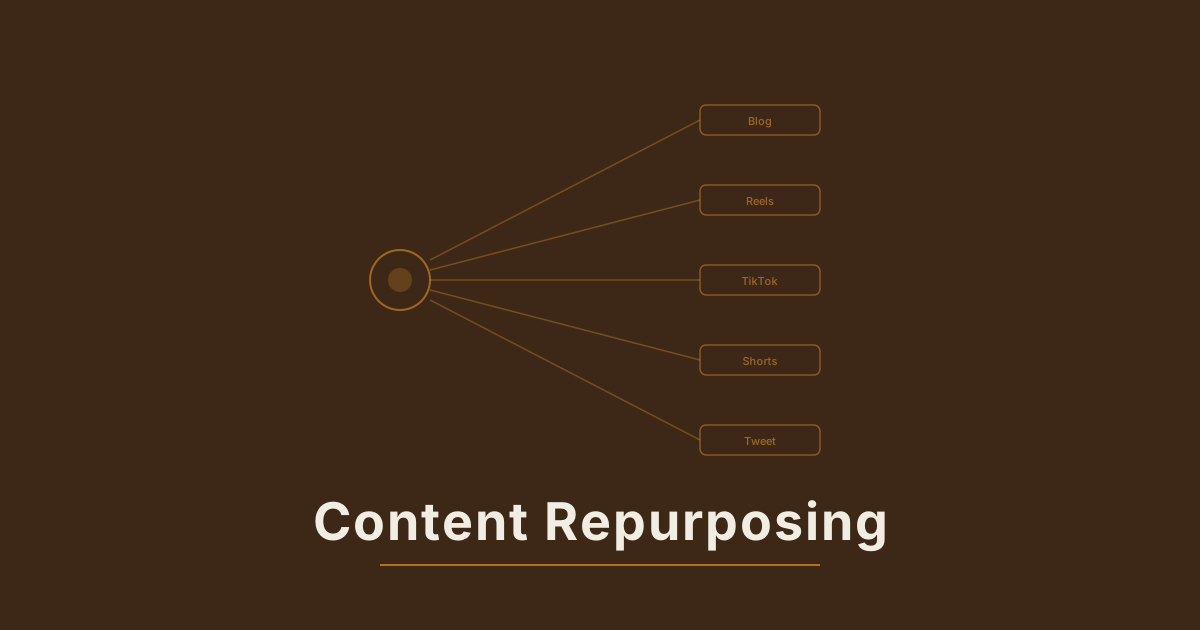
The same underlying clip doesn't perform equally across platforms, and formatting all three from a single source export requires understanding each platform's native viewing behavior.
TikTok: The hook in the first 2 seconds is the primary performance driver. Hook text is critical; trending audio layered lightly under the clip (where contextually appropriate) aids discovery; captions should be centered and large — 48–60pt equivalent is the target; clips perform best at 45–90 seconds for most podcast content categories. TikTok also disproportionately rewards specificity and numerical claims: "93% of people get this wrong" outperforms "most people get this wrong" regardless of niche, because it signals a concrete, verifiable insight.
Instagram Reels: Native audio performs better than on TikTok; face-to-camera formats index well; aspect ratio is 9:16; caption text can be slightly smaller than TikTok since the audience scrolls slightly slower. Reels can run up to 3 minutes, which means clips that would be too long for TikTok can find an audience here without editing. The Reels algorithm also rewards saves heavily — clips that viewers want to return to (how-to content, frameworks, specific tactical advice) will accumulate saves faster than entertainment-forward clips.
YouTube Shorts: Completion rate matters more than on TikTok or Reels, so front-loading the most interesting claim and fully delivering on it within 60 seconds is the priority. YouTube Shorts feeds directly into regular YouTube watch history and channel recommendations, which means a strong Shorts performance drives subscribers to the long-form show. For a podcast trying to grow its full-length audience, YouTube Shorts is the platform where clip performance has the highest downstream ROI — a viewer who subscribes to your channel from a Shorts clip is more likely to watch a full episode than a TikTok follower who follows from a clip.
For each platform, generating a native version from a single clip — reformatted to the right aspect ratio with platform-appropriate caption size and hook treatment — takes 10–15 minutes per clip with AI video tools, or less in a batch workflow where format templates are pre-configured.
Batch Repurposing Your Episode Backlog#
Most podcasters have dozens to hundreds of episodes sitting in an archive with minimal social distribution. A show that's been running for two years at weekly cadence has approximately 100 episodes — roughly 75 hours of recorded conversation that has never been extracted for short-form video. That archive is a significant underutilized content asset.
AI batch content creation workflows make this backlog tractable. The structured workflow for repurposing a backlog:
- Transcribe the full archive. Modern AI transcription runs at 5–10x realtime — a 100-episode backlog of 45-minute episodes takes roughly 8–15 hours of compute time to fully process, at a per-hour cost of $1–5 depending on tool.
- Run AI highlight extraction across the transcript library. Rather than processing episodes one by one, a single prompt against all transcripts identifies the top 30–50 clips across the entire archive — the moments that score highest across all criteria simultaneously.
- Produce the selected clips as a batch sprint. Format all 30–50 clips in a single production session, generating all platform variants in sequence rather than episode by episode.
- Schedule across 4–8 weeks of distribution. Post 1–2 clips per platform per day, mixing recent and archival episodes so the feed doesn't cluster around any single time period.
This approach produces 8–12 weeks of daily short-form content from existing material without recording anything new. For a podcast that has been running for 2+ years, the backlog repurposing sprint typically surfaces content that's as strong as anything produced fresh — often stronger, because the best moments from 100 episodes beat the best moments from any single episode.
What Makes a Podcast Clip Stop the Scroll#
Not every strong podcast moment translates to a strong short-form clip. The patterns that predict clip performance have become clear from running this workflow at scale:
High-performing clip anatomy:
- Opens with a concrete claim or a direct question — not a conversational transition ("Well, the thing is..." kills clips before they start)
- Contains one clearly stated idea, not two or three ideas woven together
- Includes a specific detail — a name, a number, a named company, a named experience — that makes the claim concrete rather than generic
- Ends at a natural resolution point, not mid-thought or mid-sentence
- Has a natural energy arc: the speaker gets more specific or more emphatic toward the end, rather than trailing off
Clips that consistently underperform:
- Clips that require knowledge of the preceding conversation to understand without context
- Clips where the interesting insight arrives at the very end after significant setup
- Clips where both speakers are talking simultaneously or finishing each other's sentences (caption quality degrades and the conversational thread is hard to follow)
- Clips from episodes where the framing has aged poorly — market conditions, platform specifics, or cultural context that no longer holds
The pattern holds across niches: a specific, standalone, claim-first clip with a visual hook and synchronized captions will outperform a broader, more exploratory clip from the same episode in virtually every head-to-head test.
Tracking Which Clips Drive Real Audience Growth#
Measuring podcast clip performance goes beyond view count. For a podcast, short-form distribution has two distinct goals: platform-native engagement (views, saves, follows on the clip platform) and show audience conversion (full episode listens, show subscriptions). Optimizing for one without tracking the other creates a situation where you have a lot of social followers who never become podcast listeners.
Metrics to track by platform:
- View count and completion rate (clip-level performance signal)
- Profile visits from the clip (leading indicator of follow and subscriber conversion)
- Link clicks to full episode (direct conversion signal — use UTM parameters on the link in bio)
- Show subscriber growth rate, correlated with clip publishing cadence and volume
The correlation between clip output volume and show growth is the most actionable insight from this kind of tracking. Teams that measure this across a 90-day window consistently find a threshold effect: below a certain weekly clip volume, show growth is flat; above it, growth compounds. That threshold varies by show size and niche, but for most podcasts it's somewhere between 5 and 10 clips per week across platforms.
AI content repurposing strategy addresses the broader framework for measuring content repurposing ROI — the podcast-specific element is tracking the conversion from short-form clip follower to long-form listener, which is what distinguishes a clip strategy that grows the show from one that only grows social metrics.
The workflow — transcript, AI highlight extraction, AI video formatting, platform-specific export, scheduled distribution — compresses what used to be a 3-day production cycle per episode into something a solo creator or small team can maintain week over week. The result is a distribution system that finally matches the quality of what most podcasters are actually recording.
If you want to turn your podcast episodes into a consistent short-form video engine without adding a video editor to your team, Mango handles the generation side so you can focus on the conversations worth clipping.